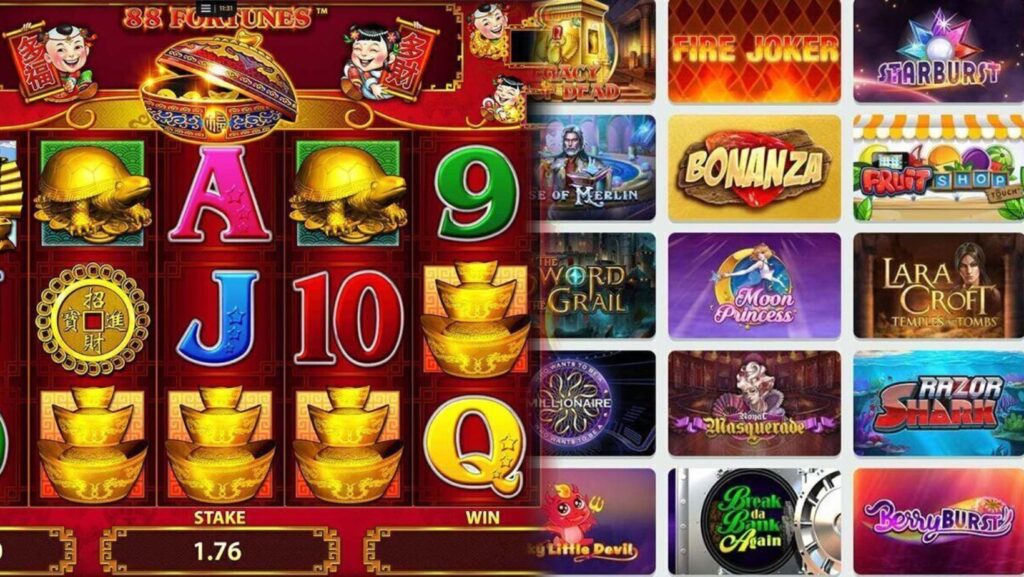

Few industries have experienced the kind of explosive growth that online gambling has seen over the past decade. What started as a niche corner of the internet has transformed into a multi-billion-dollar global enterprise, attracting everyone from casual players looking for weekend entertainment to serious investors analyzing the financial mechanics behind gaming platforms. Understanding how casinos actually make money — and more importantly, how players can make smarter decisions within that ecosystem — is essential knowledge for anyone who wants to engage with this industry thoughtfully.
This article breaks down the business side of online gambling, explores the models that drive revenue, and examines the emerging platforms that are reshaping how players interact with casino-style entertainment.
The House Edge: The Foundation of Every Casino Business Model
Every casino, whether physical or digital, is built on one fundamental principle: the mathematical advantage held by the house. This edge, expressed as a percentage, represents how much of every wagered dollar the casino expects to retain over time. Slot machines typically carry a house edge ranging from 2% to 15%, while table games like blackjack can drop as low as 0.5% when played with optimal strategy.
What makes this model so powerful from a business perspective is the law of large numbers. Individual players may win or lose dramatically on any given session, but when you aggregate millions of bets across thousands of players over months and years, the house edge becomes extraordinarily reliable. This is why casinos can afford to give away free hotel rooms, meals, and entertainment — the mathematics of the games themselves fund everything else.
For online platforms, the overhead is significantly lower than physical casinos. There are no buildings to maintain, no cocktail waitresses to tip, no electricity bills for thousands of slot machines blinking on a casino floor. This reduced cost structure allows digital operators to pass some value back to players through higher return-to-player (RTP) percentages, which is why you’ll frequently find online slots advertising RTPs of 96% or higher compared to the 85-90% common in land-based venues.
Licensing, Regulation, and the Cost of Doing Business Legitimately
Running a legitimate online casino is not cheap. Reputable jurisdictions like Malta, Gibraltar, the Isle of Man, and New Jersey all require significant financial deposits, ongoing compliance costs, and rigorous auditing by third-party firms. These costs are substantial — a major gaming license can cost hundreds of thousands of dollars annually when you factor in application fees, ongoing regulatory compliance, responsible gambling infrastructure, and anti-money laundering programs.
For players, this creates an important distinction. Licensed casinos have real financial incentives to play by the rules because losing a license means losing the entire business. Unlicensed operators carry far greater risk of fraud, rigged games, and withheld winnings. The regulatory cost, counterintuitively, is a feature rather than a bug — it filters the market toward operators who can sustain the financial burden of proper compliance.
Bonuses, Promotions, and the Acquisition Game
Customer acquisition is one of the largest line items in any online casino’s budget. Welcome bonuses — sometimes matching a player’s initial deposit by 100% or even 200% — sound like extraordinary generosity, but they are carefully calculated marketing investments. Wagering requirements, which typically demand players bet the bonus amount 20 to 50 times before withdrawing, ensure that the mathematical edge of the games erodes the bonus value before most players can cash out.
This creates an interesting dynamic. Bonuses are genuinely valuable for players who understand the terms and approach them strategically. For players who simply chase the headline number without reading the fine print, bonuses can actually encourage more spending than originally planned. The best approach is to calculate the realistic value of any bonus offer by considering the wagering requirement, eligible games, and your personal playing style.
The Rise of Alternative Gaming Models
One of the most significant developments reshaping the online gambling landscape is the emergence of alternative gaming models that sidestep traditional real-money wagering frameworks entirely. Chief among these are social casino platforms and, increasingly, sweepstakes casinos, which operate under a fundamentally different legal and financial structure than conventional gambling sites.
In a sweepstakes model, players receive virtual currencies that can be used to play casino-style games. Some of these currencies can be redeemed for real prizes under specific conditions, creating a real-money element without technically constituting gambling under most U.S. state laws. This approach has opened casino-style gaming to players in jurisdictions where traditional online gambling remains legally restricted — which, in the United States, still encompasses most of the country.
From a business perspective, sweepstakes platforms are fascinating case studies in regulatory arbitrage. By structuring their offerings around established sweepstakes law rather than gambling statute, they access an enormous potential market that conventional licensed casinos cannot reach. For investors and business analysts watching the gaming sector, these platforms represent one of the fastest-growing segments in entertainment technology.
Technology Investment and the Infrastructure Behind Modern Casinos
The technology stack required to run a competitive online casino is genuinely impressive. Random Number Generators (RNGs) must be certified by independent testing labs such as eCOGRA or iTech Labs. Payment processing must handle dozens of currencies and payment methods while maintaining fraud detection systems sophisticated enough to identify suspicious patterns without blocking legitimate players. Customer support infrastructure needs to operate around the clock across multiple time zones.
Beyond compliance technology, the most successful platforms are investing heavily in live dealer studios, which stream real human dealers conducting games like blackjack, roulette, and baccarat directly to players’ screens in real time. This category has grown dramatically because it bridges the gap between the convenience of online play and the authentic social experience of a physical casino. Companies like Evolution Gaming have built entire empires on this model, generating billions in revenue by licensing their live studio technology to casino operators worldwide.
Mobile Gaming and the Shift in Player Behavior
Smartphone adoption has fundamentally changed how casinos design their products and allocate their development resources. Industry data consistently shows that more than half of all online gambling activity now occurs on mobile devices, with that figure continuing to climb. This has pushed casinos to invest aggressively in mobile-first design, faster loading times, and touch-optimized interfaces that perform as well on a small screen as they do on a desktop.
The behavioral implications are significant. Mobile gaming tends to produce shorter sessions with higher frequency, which changes how players interact with games and how casinos structure their reward systems. Push notifications, daily login bonuses, and time-limited offers are all calibrated specifically for mobile habits — brief windows of attention that need to be captured quickly before the player’s focus shifts elsewhere.
What Smart Players and Observers Should Take Away
Whether you’re a player, an investor, or simply a curious observer of the digital economy, the online casino industry offers genuinely interesting lessons about business model design, regulatory navigation, and consumer psychology. The most successful platforms are not simply lucky — they have built sophisticated systems for managing risk, acquiring customers profitably, and creating experiences compelling enough to retain players over time.
For players, the clearest takeaway is that knowledge is leverage. Understanding the house edge, reading bonus terms carefully, choosing properly licensed platforms, and setting firm session budgets are all practices that make the experience both safer and more enjoyable. For business watchers, the sector’s ongoing evolution — particularly the growth of alternative models and international market expansion — makes it one of the more dynamic corners of the entertainment technology landscape to follow over the coming years.
The business of online gambling rewards those who approach it with clear eyes and a genuine understanding of how the economics work. That’s true whether you’re sitting at a virtual blackjack table or analyzing the industry from a boardroom.